
Background
In early 2025, Electronic Arts (EA) experienced a 16% drop in share value, roughly $6 billion in lost market cap despite the gaming industry’s overall size and reach. In this project, my group and I set out to understand what went wrong, beyond the headline numbers.
Over the course of about 2 months, we conducted a multi-layered analysis focused on three key issues:
Sales Decline – EA Sports FC 25 and Dragon Age underperformed expectations, with mixed reviews citing a lack of innovation.
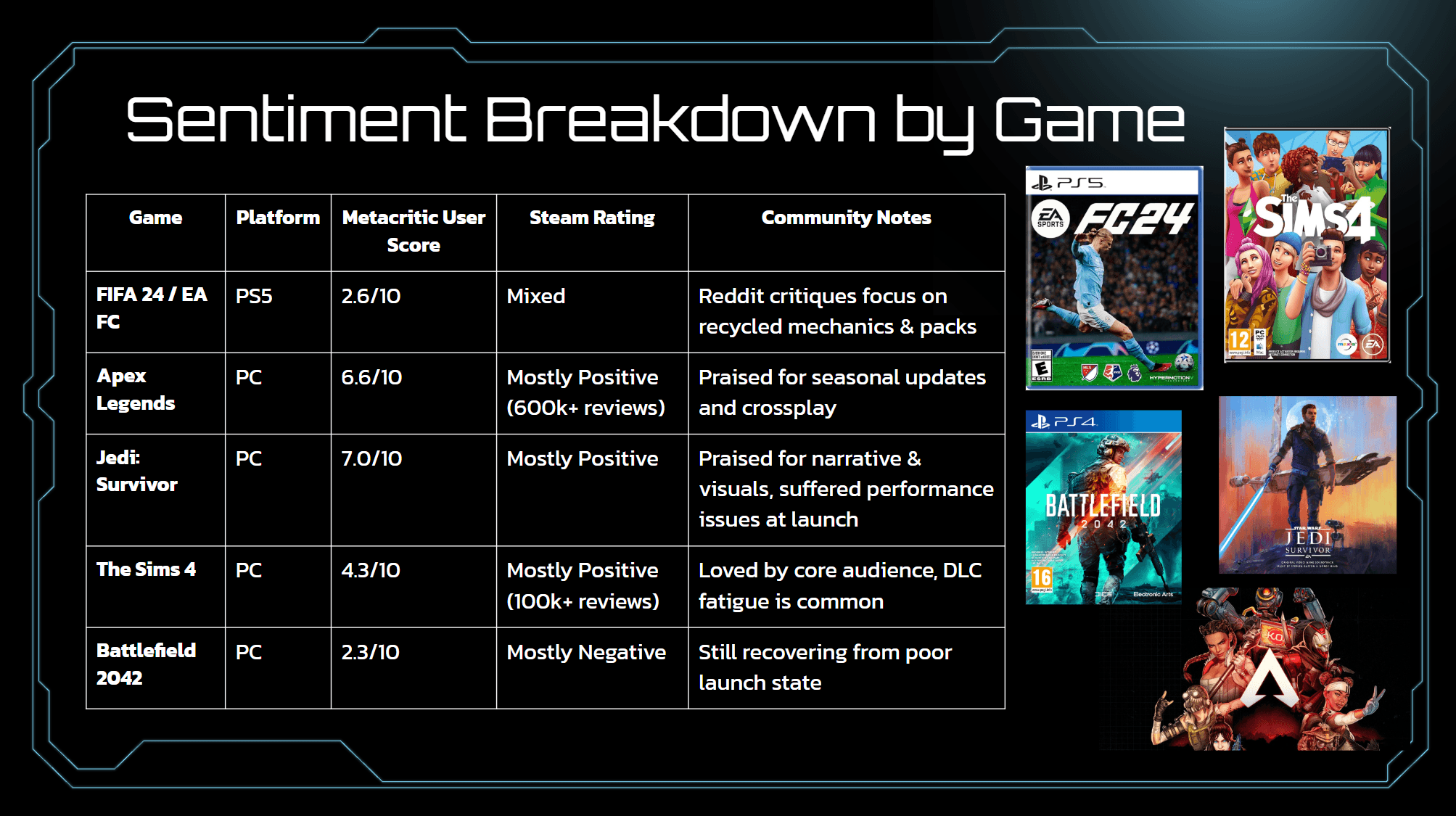
Brand Perception – Years of consumer frustration around microtransactions and repetitive gameplay eroded player trust.
Competitive Pressure – Indie games, propelled by creativity and grassroots marketing, outshined EA’s high-budget titles in cultural relevance and player loyalty.
We also benchmarked EA’s fan policies and content strategies against competitors like Riot, Blizzard, and Hoyoverse. Unlike EA, these companies embraced community creativity and leaned into fan engagement.

Results and Impact
We recommended three focused strategies to address the decline and unlock long-term growth:
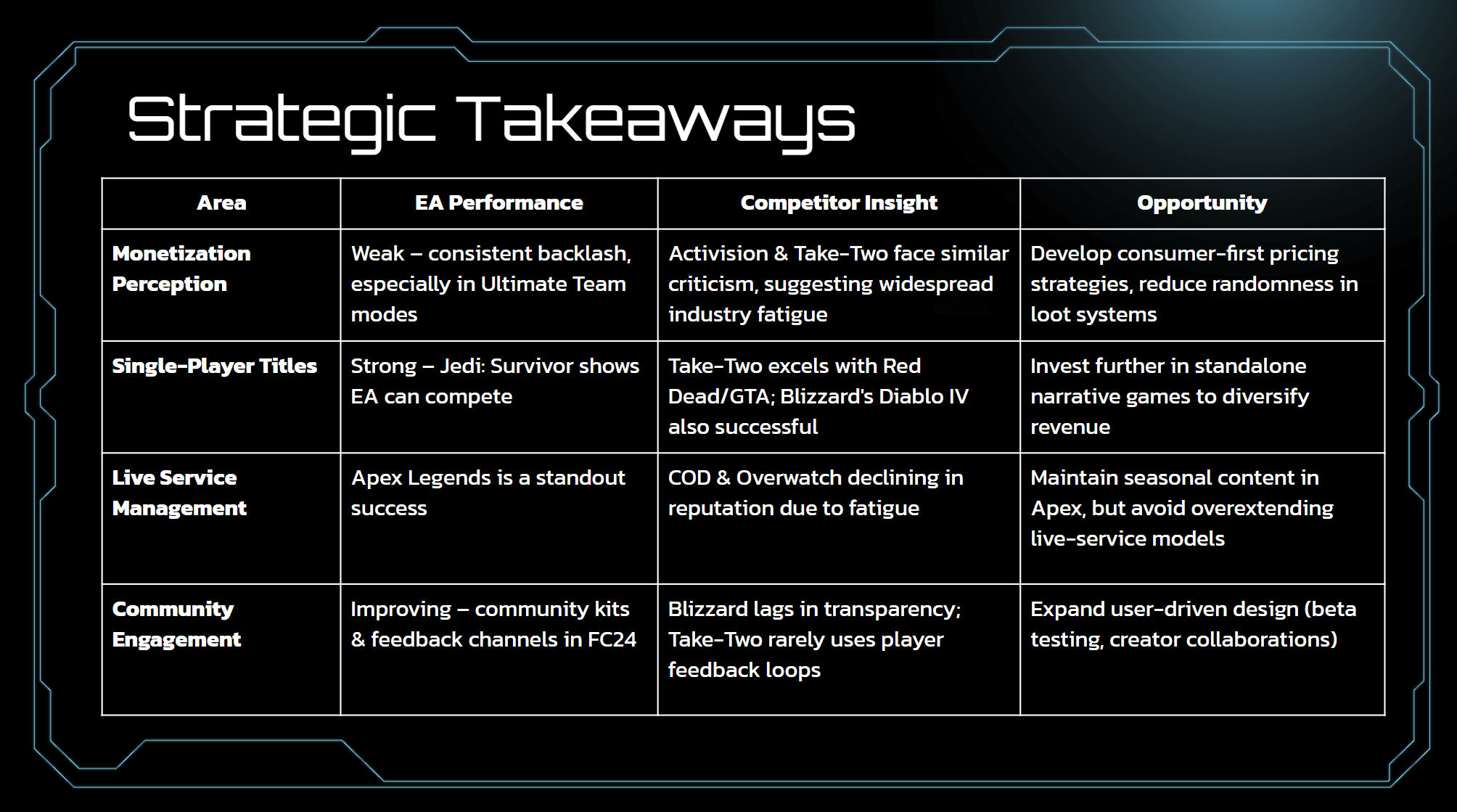
Diversify the Game Portfolio – Invest 1–2% of annual revenue into acquiring or developing mid-budget original titles with breakout potential.
Rebuild Player Trust – Shift monetization in flagship titles toward cosmetic-only purchases, paired with a strong PR campaign.
Go Digital-First – Develop free-to-play or Games-as-a-Service (GaaS) titles with launch strategies built around platforms like Steam and EA Play.
Our final report included phased implementation timelines, cost breakdowns, and impact projections—highlighting that even small strategic shifts could reposition EA for sustainable growth and stronger player loyalty.